
I owe Niklas Luhmann a blog post, at minimum.
The idea of autopoiesis originated in biology (Maturana and Varela, 1972) [1], but shortly thereafter numerous thinkers, including Maturana himself, attempted to extend the principles into different fields such as computer science and sociology. One of the most influential of these thinkers was Niklas Luhmann who proposed the refinement in a series of publications (”Social Systems”, “The Autopoiesis of Social Systems”, 1986) [2, 3] that autopoiesis is not strictly biological or even physical but rather is an operation of exchanges. The objections from biology purists have been consistent: “the system does not produce its own physical components”.
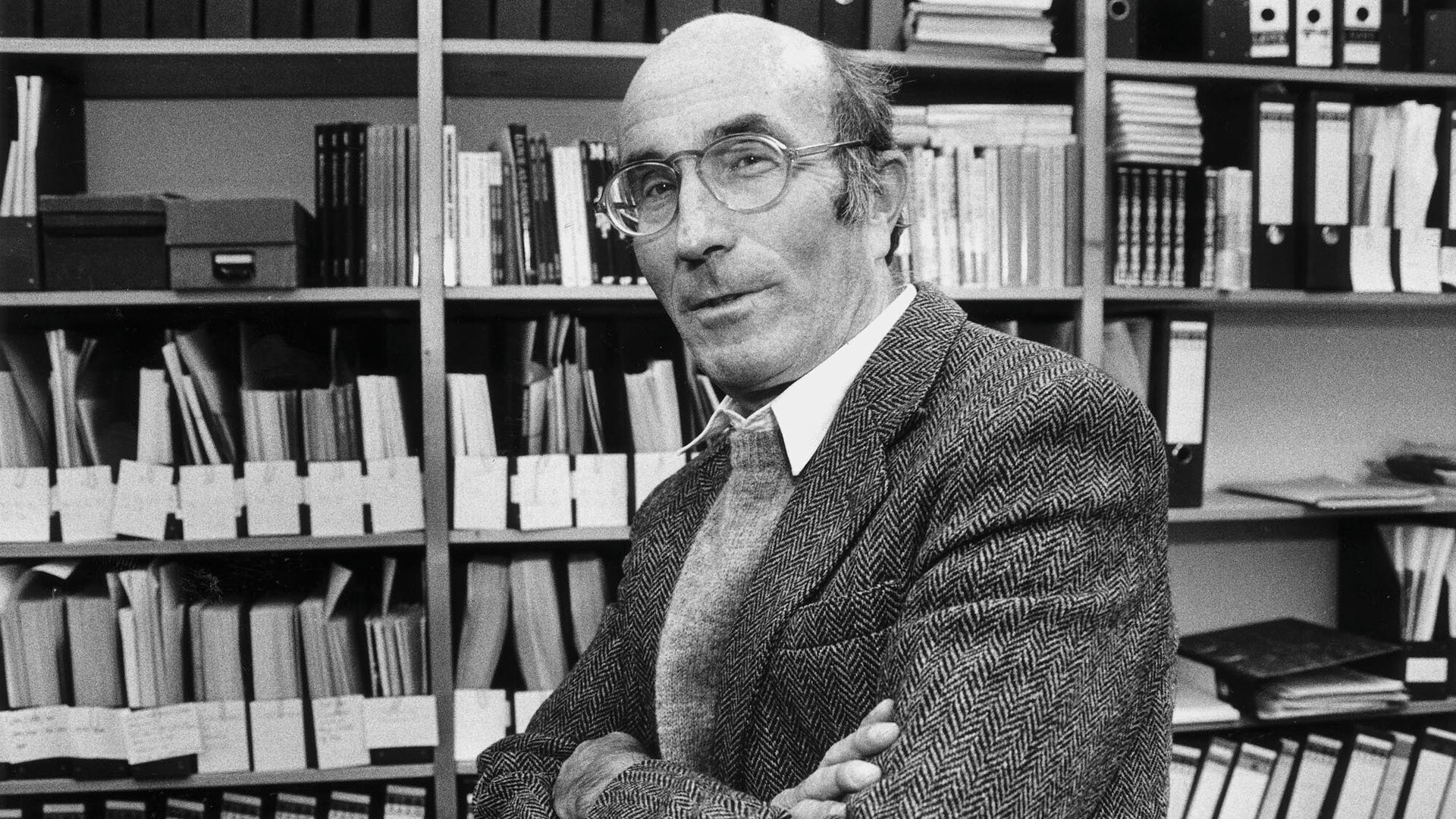
Luhmann argues that autopoiesis is fundamentally about exchange and the specific dynamics involved in exchange: communication or the lack thereof, shared semantics or the lack thereof, agreement or disagreement, coordination or conflict. Luhmann argues that social systems are fundamentally self-referential and closed, but remain open and responsive to the broader context. He argues that information does not exist simply lying about in the natural world but rather is created through the observational apprehension or perception of autopoietic systems, digested into information, and distributed throughout the collective. In this way the system establishes shared beliefs that inform its decisions and its subsequent response.
The environment does not instruct the system to do something but rather perturbs the system and the system, through a series of exchanges, negotiates its understanding and response.
Minary shares many parallels to Luhmann’s autopoiesis. Minary does not allopoietically document the environmental peturbations directly. Minary instead observes them, negotiates in mutual exchange, develops shared beliefs, and then responds informed by its negotiated beliefs. Luhmann argues that social systems are self-referential and are hermetically sealed from objectivity. Minary mathematically cancels out all objective information from its internal beliefs, leaving only self-referential information. [4] Minary may be more than “just” a socially autopoietic system, but it almost certainly minimally qualifies as such.
Luhmann borrowed “structural coupling” from Maturana by describing social systems as co-evolving with their environments without the environment dictating their internal structure. Minary exhibits this precisely:
Signals drive consensus (coupling)
Signals are canceled from learning (no instruction)
Decisions and beliefs are determined purely by internal relationships (self-referential)
The system does not believe what the signal itself means, it learns what the signal means for its internal relational dynamics.
Luhmann agrees that autopoietic systems continuously regenerate their components, but he asserts that the components are the participatory relationships and not the participants themselves. Biology tacitly agrees -- cells can die and be replaced and yet the system continues to function coherently. Luhmann never canonically described a mechanism for exchange. Minary does: conservation. Conservation creates closure. Minary achieves conservation and stability by enforcing the rule that exchange must be strictly linear and zero sum. It enforces scarcity through a finite distribution of social capital. This means that a system following the Minary definition cannot collapse to zero or infinity and will always have a coherent social structure. This mathematical constraint forces the perspectives to negotiate and find ways to compromise at all times. A perspective cannot grow without the recession of the others and a perspective cannot abstain without the others taking on its responsibilities. Closure is achieved because nothing leaks and nothing is gained.
Any autopoietic process can be observed from the outside, but unlike “hard”, physical systems, the subjective, relational information of any given Minary is readily available for direct inspection. You do not have to believe or interpret the response of a Minary. You can peek behind the curtain by treating a Minary as a queryable data structure. This is a novel and profound contribution. If perspectives can be wrapped in a Minary, you get a belief manifold “for free”. You get an identity “for free”.
If Minary qualifies as a Luhmannian system, what does this mean? Minary formalizes an autopoietic protocol for building systems that have beliefs, identity, and can participate in co-evolution with their environment.
Niklas Luhmann gave us a theory of self-referential systems. Minary gives us a protocol. The question is no longer “is computational autopoiesis possible” but “what can we build with it?”
References
Varela, F. J., & Maturana, H. R., & Uribe, R. Autopoiesis: The organization of living systems, its characterization and a model. BioSystems. 1974.
Luhmann. Social Systems. 1984.
Luhmann. The Autopoiesis of Social Systems. 1986.
Connor & Defant. The Minary Primitive of Computational Autopoiesis. 2026.